Through a questionnaire survey of school leaders, we came to a conclusion. China has always maintained a high degree of attention to the learning of students' second language and also attached great importance to the development of nonnative language English teaching. Dong investigated the development trajectory of listening strategy use and listening performance of EFL learners and explored the dynamic correlation between the two variables from the perspective of dynamic systems . The study found that the learners' listening strategy use and listening performance showed a nonlinear development pattern. The regression of listening performance can predict the progress of listening strategy use to some extent, and the approach of a new stage has great volatility and variability. Aiming at the current situation where EFL learners focus on foreign language learning, vocabulary, vocabulary learning strategies, and receptive vocabulary skills, Ning proposed that EFL learners should improve their productive vocabulary skills through writing.
It turns out that writing does help to improve the productive vocabulary ability of EFL learners in foreign language learning and promotes the learners' understanding of vocabulary meaning . He uses a language model based on usage as the theoretical basis and proposes a complex adaptive system method to analyze language expression, discussing the complex dynamics and nonlinear development of network languages from the perspectives of meaning construction, grammaticalization, and semantics . The research shows that network language can be seen as a complex adaptive system, affected by the interaction between user perception, social culture, and the surrounding environment. Based on the cognitive processing model supported by multimedia in second language learning, Yang S proposed how to teach words and realize dialogue reading while EFL learners watch multimedia stories to improve their oral narrative ability. The results show that bilingual students' literacy skills are higher than literacy skills, which helps to narrow the gap in the text-level literacy between EFL English learners and native English speakers .

From the literature reading of the domestic complex dynamic system theory, there are relatively few studies on the application of complex dynamic system theory to the oral English learning of English majors. An effective way of oral English teaching in colleges and universities is necessary and feasible. This position paper is designed to address the knowledge and practices teachers need in order to create and teach effective curricula and materials that engage English language learners , develop their academic proficiency, and help them negotiate their identities as multilingual language users.

More specifically, this paper reviews current research into the language and literacy needs of these young people as they participate and learn in English-medium classes. NCTE has made clear multilingual students' right to maintain their home and/or native languages (see "On Affirming the CCCC 'Students' Right to Their Own Language'" 2003). Thus, this paper addresses ways teachers can help students develop their English language abilities as well as ways they can support their students' multilingualism.

In United States education policy, ELLs are defined as students who know a language other than English and are developing their English proficiency. Students' abilities range from not speaking English at all to being fully biliterate. Teachers can use the recommendations in this paper to support all of these learners. Historically, literature has noted a divide between the development of social language abilities in English language learners and the development of academic language .

Cummins coined the acronyms BICS and CALP to help explain students' language abilities to teachers. This distinction helps highlight that many English language learners may quickly develop proficiency in casual spoken English but may continue to struggle with academic language and writing. Awareness of the differences between social language and academic language can help teachers assist students in all domains of language—listening, speaking, reading, and writing.
When making the distinction between conversational or social language and academic language, Cummins drew upon work by Skutnabb-Kangas and Toukomaa , who had been studying Finnish children living in Sweden. While the children were seemingly fluent in both Finnish and Swedish, they were falling behind academically and not meeting grade level expectations. Cummins hypothesized that there were two elements of language proficiency, one reflecting the ability to carry on conversations about everyday events, and another that was needed to comprehend school subjects. In one study testing this hypothesis, Cummins examined four hundred teacher referral forms and psychological assessments of English language learners from a large school district in Canada. Similar to what was found with Finnish children in Sweden, the forms prepared by teachers and psychologists noted that the children had no difficulty understanding English, yet they were performing poorly on English tasks in the classroom and on the verbal portions of cognitive ability tests. Since the English language learners appeared to speak English well, the teachers and psychologists assumed difficulties in class were due to cognitive abilities rather than linguistic factors and placed many of the children in special education.
Cummins argued that English language learners may not necessarily have difficulties learning, but that there was the possibility that they had not developed the appropriate type of language proficiency to be successful in an academic setting. He believed that these ELLs had developed the ability to converse casually, but had not developed academic language proficiency. In addition to knowledge related to language and reading skills, teachers working with diverse learners also need a collection of strategies and techniques to help meet the diverse cultural and linguistic needs of students. Students who are at the early stages of English language proficiency benefit from linguistic, graphic, and visual supports (Facella, Rampino, & Shea, 2005; Herrel & Jordan, 2012). For example, linguistic supports could include things such as opportunities to interact and engage in conversations, providing students with language models, and modification of sentence patterns.

Examples of graphic supports would be providing tables or graphic organizers to assist learners. Graphic organizers, such as idea webs or story pyramids, are greatly beneficial to ELLs because they can facilitate an understanding of challenging concepts and ideas without the use of long explanations that may be confusing. Cummins, Mirza, and Stille advocate for the use of visual aids and graphic organizers as a way to scaffold academic language for English language learners, noting that this can enhance literacy engagement. See Table 1 at the end of this chapter for websites offering graphic organizers that can be downloaded.
As a way of providing visual supports, teachers can use pictures or illustrations, manipulatives, and multimedia. Effective teaching strategies for ELLs as described by Facella and colleagues include the use of gestures and visual cues, repetition, and the use of real objects. Other useful strategies for teachers may include grouping ELLs with students who have strong English abilities, exposing ELLs to rich oral language, and incorporating their home language whenever possible. It is important to note that these groups and tasks should be purposefully designed and monitored by the teacher to ensure comfort and inclusion. While cooperative learning activities can be extremely helpful for English language learners, it is imperative that teachers scaffold these activities so that English language learners of all proficiency levels can benefit (Zwiers & Crawford, 2011).

Teachers should also encourage parents to read with their children, even if that is only possible in their home language. As mentioned before, language skills can transfer and skills in one language can support language and literacy building in the other language. These findings suggest that even when acquisition of a second language begins at an early age, several years can be required to acquire true "native-like" levels of proficiency and moreover, that L2 learners may always differ from native speakers. In a review of research on child L2 learners, Paradis (2006, p. 401) concludes that "obtaining oral language proficiency in the L2 on par with native speakers can take most of the elementary school years" and furthermore, that individual children vary considerably in their rate of L2 development. That it can take ELs so long to achieve proficiency in English for academic purposes probably reflects several factors. Of note, it probably reflects the complexity of academic language skills themselves.

In addition, it could reflect a lack of systematic and explicit focus on instruction of academic English in classes with EL students. It undoubtedly also reflects the fact that native speakers of English are advancing in their level of proficiency in English for academic purposes from grade to grade. To the extent that ELs' performance on reclassification tests is compared with that of native speakers, ELs are being compared with a moving target. As result, ELs must make more yearly progress in English if they are to achieve parity with native speakers.

These findings have important implications for instruction and, specifically, indicate that ELs will benefit from systemic instruction in English for academic purposes and/or additional supports throughout their education if a native-like level of proficiency in English is expected. In immersion programs, a child's native language plays virtually no role. While teachers may use supportive strategies to help English language learners, a common feature is the exclusive use of English text.
English immersion programs are being encouraged in several states due to adoption of English-only legislation. These laws require that all children be taught English by using solely English, with claims that children can reach English proficiency in one year's time (MacSwan & Pray, 2005). For example, California, Arizona, and Massachusetts have passed laws with the intention to bar the use of primary language instruction for English language learners. These states have replaced bilingual programs with Structured English Immersion programs, which aim to expedite the English learning process by using simple English in the classroom with little to no attention on the students' native languages (Gándara et al., 2010). All three states aim to have students in Structured English Immersion programs for no more than one year before they are moved to regular classes. However, evidence from research suggests that students need three to five years to achieve advanced English proficiency (Genesee, Lindholm-Leary, Saunders, & Christian, 2006).

In their study on acquisition of English, MacSwan, and Pray found that only about two percent of children attained English language proficiency in one year. It has been suggested that since the United States has made an effort to maintain the dominance of the English language in schools, a culture has developed that defines students by English proficiency (Gándara et al., 2010). An example of this can be found in terms used in government documents and schools, such as Limited English Proficient, that focus exclusively on how well a student has acquired the English language. First, the design of teacher professional development programs should consider a bottom-up approach in which teachers' beliefs, identities, learning styles, needs, interests, and the needs of local socio-cultural contexts to obtain more positive and lasting results. Second, school teachers are now considered "knowers" (Quintero & Guerrero, 2013) that should share power with policy makers and university teacher educators so that they can have a voice in the design, planning, and implementation of language policies.
Apart from being researchers and reflective practitioners, language teachers are called "to start acting as transformative intellectuals sociopolitical conscious and stretch their role beyond the borders of the classroom" (Kumaravadivelu, 2003, p. 14). Thirdly, the way teachers learn has shifted from isolated work to communities of practice, from training to development, from imposed to self-initiated, from training on methodological areas to developing research and reflective skills. However, it was evidenced that teacher learning as a result of professional development programs not only depends on the strategies used, but also relies on institutional support. There is an urgent call for school administrators to become aware of the need to help teachers do research and engage in critical reflection by allocating time and resources.
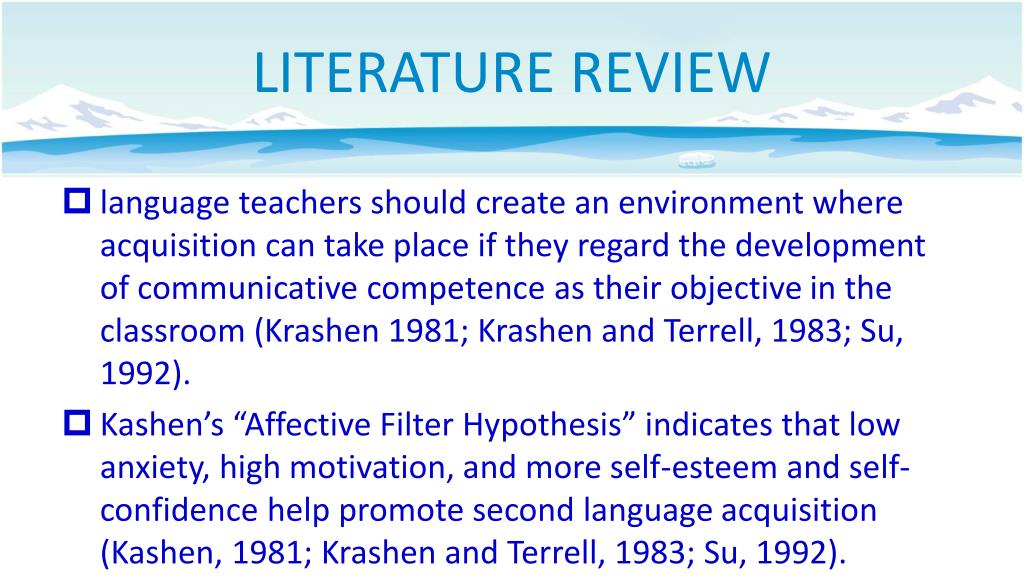
At the same time, if school administrators do not recognize their teachers as valuable assets within their institutions, educators will continue to feel ineffective, with interests and ideas that are not worth exploring (Cárdenas, 2004). Although the focus in this chapter is on the development of English proficiency, it is important to point out that language proficiency is not necessarily the only or even the most important barrier to academic success among ELs. Individual ELs can experience a number of different challenges simultaneously (Suárez-Orozco et al., 2010), with significant and commensurate effects on their academic outcomes (Lindholm-Leary, 2010). Of these, socioeconomic status has been shown to be particularly potent .

For example, Kieffer , using data from the Early Childhood Longitudinal Study , found smaller differences between ELs and native English-speaking students who attended low-poverty versus high-poverty schools. As well, and in contrast to other research on the performance of language minority students, Lesaux and colleagues found few significant differences in reading comprehension between ELs and non-ELs where the ELs were distributed across the same schools and neighborhoods as the non-ELs. They speculate that EL status and low socioeconomic status are often confounded in other studies on ELs and that this may account for the difference in their findings. Additionally, it is important for teachers to know about students' levels of literacy in their first language, levels of oral proficiency in English, and educational background.

Although Miguel was a struggling reader at school, his literacy skills were crucial for life at home. He helped his mother with legal documents and by scouring weekly sale advertisements to find the best deals. Miguel also served as a translator, both written and oral, for his mother.

What Is Review Of Related Literature In English Studies such as this one are crucial to the field to show educators that English language learners bring a variety of skills with them to the classroom and have a lot to offer. This study showed that the ways in which an individual uses literacy may not necessarily conform to traditional school views of literacy. It is important for both researchers and educators to be aware of the various contexts in which students use literacy.
The use of emerging technologies in foreign language education has been of great interest to teachers and scholars in Colombia. However, most of the research conducted in this area has been at the level of teaching or facilitating the acquisition of specific language skills to groups of students across different levels of education (Galvis, 2011; Guerrero, 2012; Rojas, 2011; Velandia et al., 2012). In contrast, technology-mediated alternatives for language teacher professional development have been slightly less predominant.

Table 6 shows that most studies in this area have sought to examine language teachers' roles, beliefs, attitudes, and competences as well as teachers' realization of the uses and benefits of specific technologies for language learning and teaching. In this study, we examined how preschool students with language delays engaged in interactive dialogue during regular circle time and dramatic inquiry activities. Overall, students exhibited higher levels of linguistic engagement during traditional instruction; however, multimodal analysis revealed the ways students engaged in interactive dialogue during dramatic inquiry was far more complex. We conclude that dramatic inquiry created opportunities for students to learn and produce academic language and corresponding multimodal actions while regular instruction provided students opportunities to practice social and instructional language. Our analysis demonstrates the complexities of how preschoolers with language delays use different forms of verbal and non-verbal language to share their personal experiences and content knowledge with others. In all, this study emphasizes the importance of considering both quantitative and qualitative data when trying to understand how preschoolers engage in interactive dialogue in the classroom.
Multilingual students differ in various ways, including level of oral English proficiency, literacy ability in both their home languages and English, and cultural background. English language learners born in the United States often develop conversational language abilities in English but have limited academic language proficiency. Newcomers, on the other hand, need to develop both conversational and academic English. Education previous to entering US schools may determine students' literacy levels in their native languages. Some learners may have age- or grade-level proficiency, while others have limited or no literacy due to the quality of previous schooling, interrupted schooling due to wars or migration, and other circumstances (Suárez-Orozco & Suárez-Orozco, 2001).
Given the wide range of multilingual students and their backgrounds, it is important that teachers take the time to learn about their students, particularly in terms of their literacy histories. Corpus is recognized as powerful technology in language learning, because of its wide range of lexicographic resources . Dash and Arulmozi defined corpus as a collection of speeches, conversations, writings, etc., that students use to study and describe a language. For example, the London-Lund corpus consists of about 435,000 spoken British English words. It also contains 5000-word samples that adult, educated, professional people use in their daily life, including telephone and face-to-face conversations, discussions, lectures, and radio commentaries .
In Bardovi-Harlig, Mossman, and Vellenga , it is suggested that teachers build a corpus that matches the teaching objectives and provide resources for pragmatic teaching. Learning through guided corpus searches is also popular, as pragmatic routines and conventional expressions are particularly amenable to searches in a corpus . It is found that writing and vocabulary learning are often considered as target language skills when using corpus.

Li investigated the role of direct corpus use in language learners' collocational competence in academic writing. The results showed that the use of corpora was useful in developing student collocational competence and raising their awareness of habitual collocational use. Ackerley compared learning performance of students who used and who did not use a corpus. A wider range of genre appropriate phraseology usage was demonstrated by those who had used a corpus. Furthermore, a lower number of stock phrases were produced by these students. Daskalovska's research also supports the positive role of direct corpus application in language context.
Other language skills like reading and speaking were also noticed although there were not so many examples, like for writing and vocabulary learning. An in-depth review of 83 studies in HE documents the growth of EMI in different geographical areas. We conclude that key stakeholders have serious concerns regarding the introduction and implementation of EMI despite sometimes recognising its inevitability. We also conclude that the research evidence to date is insufficient to assert that EMI benefits language learning nor that it is clearly detrimental to content learning.

There are also insufficient studies demonstrating, through the classroom discourse, the kind of practice which may lead to beneficial outcomes. This insufficiency, we argue, is partly due to research methodology problems both at the micro and macro level. This study presents a review of 33 papers on ELL, revealing the increasing application of this learning approach to language development. Target languages frequently investigated in this field were English, German, French, Chinese, and Japanese. The main ELL activities were playing digital games, watching videos, reading, listening to audios, having technology-enhanced socialisation, having face-to-face socialisation, and writing compositions.

People's engagement in ELL was overall high, with listening to audios and playing digital games as the activities in which people engaged most frequently and reading as the one in which they engaged least frequently. ELL was overall effective in developing language and enhancing affective states in language learning. Three factors may influence people's engagement in ELL, specifically, the relationship between the difficulty of ELL activities and people's target language proficiency levels, gender, and the interactive environment of ELL. The effectiveness of ELL may be moderated by the language inputs and outputs involved therein and the amount of engagement time. Based on the analysis of the results, this review may provide implications for the future practice of ELL. With the population of English language learners in U.S. schools continuing to rise, more and more teachers will be responsible for educating culturally and linguistically diverse students.

English language learners come to the classroom with varying levels of English proficiency, various life and school experiences, as well as different learning needs. This chapter was designed to move through theory and into practice to help teachers engage all learners and design effective instructional opportunities for English language learners. A brief background of English language learners was presented, with an emphasis on language acquisition and learning theories. Information in this chapter provides educators with background knowledge and strategies to best meet the needs of English language learners to promote language acquisition and help them succeed academically. In a long-term study of 67 EFL learners, he found that the performance measures taken before and after the intervention have improved significantly, confirming the effectiveness of the model in developing listening and speaking skills in terms of form, meaning, and communication-oriented strategies. Kim used a combination of two longitudinal data sources to examine students' views on the development of a new task-based language teaching curriculum and quantitatively and qualitatively analyzed the task unit survey of project portfolio entries from 27 Korean EFL learners.


No comments:
Post a Comment
Note: Only a member of this blog may post a comment.