6) "Roots and numbers are equal to squares", i.e. in+ c \u003d ax2. For al-Khwarizmi, who avoided the use of negative numbers, the terms of each of these equations are addends, not subtractions. In this case, equations that do not have positive solutions are obviously not taken into account.

The author sets out methods for solving these equations. His decision, of course, does not completely coincide with ours. When solving complete quadratic equations, al-Khorezmi sets out the rules for solving them using particular numerical examples, and then their geometric proofs. As you can see, the discriminant was not required - in incomplete quadratic equations there are no complicated calculations at all. In fact, it is not even necessary to remember the inequality (−c / a) ≥ 0.
It is enough to express the value x 2 and see what stands on the other side of the equal sign. If there is a positive number, there will be two roots. If negative, there will be no roots at all.

As you can see, the discriminant was not required - there are no complex calculations at all in incomplete quadratic equations. In fact, it is not even necessary to remember the inequality (−c / a ) ≥ 0. It is enough to express the value of x 2 and see what is on the other side of the equal sign.

If there positive number there will be two roots. The formulas for solving quadratic equations on the model of al-Khwarizmi in Europe were first set forth in the Book of the Abacus , written in 1202 by the Italian mathematician Leonardo Fibonacci. This voluminous work, which reflects the influence of mathematics from both the countries of Islam and Ancient Greece, is distinguished by both completeness and clarity of presentation.

The author independently developed some new algebraic examples of problem solving and the first in Europe approached the introduction of negative numbers. His book contributed to the spread of algebraic knowledge not only in Italy, but also in Germany, France and other European countries. Many tasks from the Book of the Abacus passed into almost all European textbooks of the 16th-17th centuries. And partly XVIII. To begin with, we will analyze the methods for solving incomplete quadratic equations - they are simpler.

IN school course mathematics, we get acquainted with several types of quadratic equations, and work out the solution using standard formulas. We all know how to solve quadratic equations, from school to graduation. But in the school course of mathematics, the formulas of the roots of quadratic equations are studied, with the help of which any quadratic equations can be solved. However, having studied this issue more deeply, I became convinced that there are other ways to solve quadratic equations that allow you to solve many equations very quickly and rationally. In the school course of mathematics, the formulas of the roots of quadratic equations are studied, with the help of which you can solve any quadratic equations. However, there are other ways to solve quadratic equations that allow you to solve many equations very quickly and rationally.

There are ten ways to solve quadratic equations. Let's consider each of them. In my work, I analyzed each of them in detail. Vieta has a general derivation of the formula for solving a quadratic equation, but Vieta recognized only positive roots.

The Italian mathematicians Tartaglia, Cardaco, Bombelli were among the first in the 16th century. Take into account, in addition to positive, and negative roots. Only in the XVII century. Thanks to the works of Girard, Descartes, Newton and other scientists, the method of solving quadratic equations takes on a modern look. Despite the high level of development of algebra in Babylon, the cuneiform texts lack the concept of a negative number and general methods for solving quadratic equations. The Italian mathematicians Tartaglia, Cardano, Bombelli were among the first in the 16th century.
Thanks to the work of Girard, Descartes, Newton and other scientists, the way to solve quadratic equations takes on a modern look. Formulas for solving quadratic equations on the model of al - Khorezmi in Europe were first set forth in the "Book of the Abacus", written in 1202 by the Italian mathematician Leonardo Fibonacci. This voluminous work, which reflects the influence of mathematics, both the countries of Islam and Ancient Greece, differs in both completeness and clarity of presentation. The author independently developed some new algebraic examples of problem solving and was the first in Europe to approach the introduction of negative numbers.

Many problems from the Book of the Abacus passed into almost all European textbooks of the 16th-17th centuries. They were found. In spite of high level development of algebra in Babylon, the concept of a negative number and general methods for solving quadratic equations are absent in cuneiform texts. Example 3.Consider an example of the specified type of incomplete quadratic equations.

Solve the equation. There are several types of incomplete quadratic equations. Example 3 Consider an example of this type of incomplete quadratic equations. Expressing the relationship between the roots and coefficients of equations by general formulas written using symbols, Viet established uniformity in the methods of solving equations. However, the symbolism of Vieta is still far from its modern form.

He did not recognize negative numbers and therefore, when solving equations, he considered only cases where all roots are positive. Expressing the relationship between the roots and coefficients of the equations general formulas, written using symbols, Viet established uniformity in the methods of solving equations. However, the symbolism of Vieta is still far from modern look.

He did not recognize negative numbers, and therefore, when solving equations, he considered only cases where all roots are positive. The Babylonians knew how to solve quadratic equations around 2000 BC. Applying modern algebraic notation, we can say that in their cuneiform texts there are, in addition to incomplete ones, such, for example, complete equations. Solving quadratic equations in this way is easy, the main thing is to remember the sequence of actions and a couple of formulas.
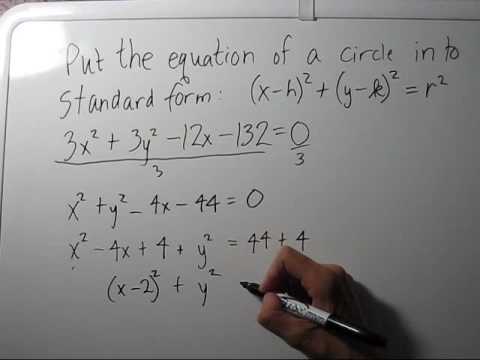
Remember, any quadratic equation can be solved using the discriminant! Even incomplete. Al-Khorezmi, like all mathematicians before the 17th century, does not take into account the zero solution, probably because it does not matter in specific practical problems. When solving the complete quadratic equations of al - Khorezmi on partial numerical examples sets out the decision rules, and then the geometric proofs. The circle intersects the x axis at the point B (x 1; 0) and D (x 2; 0), where x 1 and x 2 are the roots of the quadratic equation ax 2 + bx + c \u003d 0. Definition...

Some of the coefficients in the unreduced form or in the reduced form of the quadratic equation may equal zero. In this case, the quadratic equation is called incomplete... If all the coefficients are nonzero, then the quadratic equation is called complete. Continue calculating the discriminant D of the quadratic equation ax² + bx + c \u003d 0 using the formula D \u003d b² - 4ac.

Since these methods for solving quadratic equations are easy to use, they should certainly be of interest to students who are fond of mathematics. My work makes it possible to take a different look at the problems that mathematics sets before us. Some of the coefficients in the unreduced form or in the reduced form of the quadratic equation may be zero. In this case, the quadratic equation is called incomplete.

If all coefficients are non-zero, then the quadratic equation is called complete. Quadratic equations are the foundation on which the majestic edifice of algebra rests. Quadratic equations are widely used in solving trigonometric, exponential, logarithmic, irrational and transcendental equations and inequalities. We all know how to solve quadratic equations from school until graduation. To study various ways of solving quadratic equations, including non-standard ones, and to test the material in practice.

An incomplete quadratic equation is obtained, which we already know how to solve, we get that or . The corresponding unreduced and reduced quadratic equations are the same, i.e. have the same sets of roots. An incomplete quadratic equation has been obtained, which we already know how to solve, we get that or . The corresponding unreduced and reduced quadratic equations are the same, i.e. have the same set of roots.

However, the value of quadratic equations lies not only in the elegance and brevity of solving problems, although this is very significant. Thanks to the works of Girrard, Descartes, Newton and other scientists, the method of solving quadratic equations takes on a modern look. Example 2 .Let us indicate the coefficients that define the reduced quadratic equation ...
These coefficients are also indicated taking into account the sign. The same two numbers define the corresponding unreduced quadratic equation . Solving quadratic equations in this way is very simple, the main thing is to remember the sequence of actions and a couple of formulas. If we have not yet considered the solution of the complete quadratic equation, then we can easily solve the incomplete one using the methods already known to us. There are several types of incomplete quadratic equation.
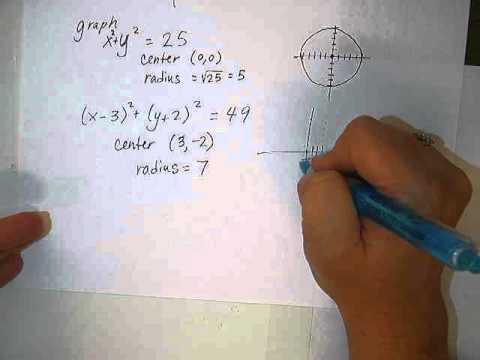
Let us indicate the coefficients that define the reduced quadratic equation . With this method, the coefficient but is multiplied by the free term, as if "thrown" to it, which is why it is called transfer method. This method is used when it is easy to find the roots of an equation using Vieta's theorem and, most importantly, when the discriminant is an exact square. The treatise of al-Khwarizmi is the first book that has come down to us, in which the classification of quadratic equations is systematically presented and formulas for their solution are given. In ancient times, when geometry was more developed than algebra, quadratic equations were solved not algebraically, but geometrically. I will give an example that has become famous from the "Algebra" of al-Khwarizmi.

The graphical way to solve quadratic equations using a parabola is inconvenient. If you build a parabola point by point, then it takes a lot of time, and the degree of accuracy of the results obtained is low. With this method, the coefficient but is multiplied by the free term, as if "thrown" to it, therefore it is called transfer method. Treatise al - Khorezmi is the first book that has come down to us, in which the classification of quadratic equations is systematically stated and formulas for their solution are given.

Bhaskara's solution indicates that he knew about the two-valuedness of the roots of quadratic equations (Fig. 3). The main thing in solving quadratic equations is to choose the right rational way of solving and apply the solution algorithm. Let us give an example that has become famous from Algebra by al-Khwarizmi.
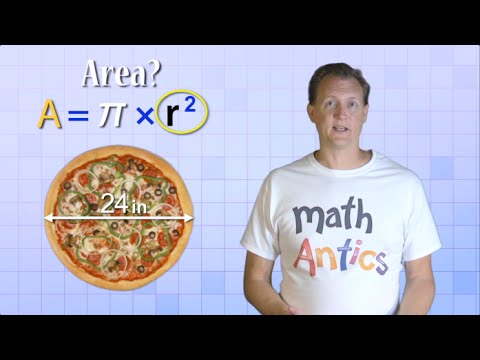
Without solving a quadratic equation, one can determine the signs of its roots if these roots are real. Bhaskara's solution indicates that he knew about the two-valuedness of the roots of quadratic equations. Work is to study theoretical foundations and their application in solving quadratic equations.

Research is to consider various, including non-standard ways of solving quadratic equations. Thus, there is a need to study various ways of solving quadratic equations. The sum of the roots of the reduced quadratic equation is equal, and the product of the roots is equal, i.e. , but.
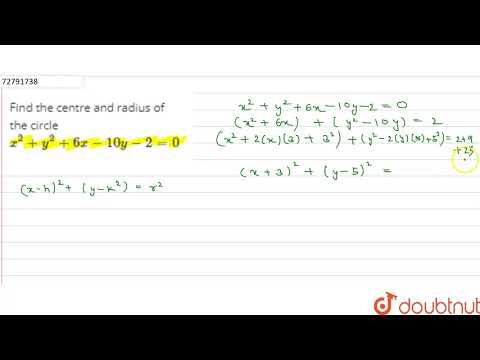
What Is The Equation For Radius Of A Circle The rule for solving these equations, stated in the Babylonian texts, coincides essentially with the modern one, but it is not known how the Babylonians came to this rule. Almost all the cuneiform texts found so far give only problems with solutions stated in the form of recipes, with no indication of how they were found. C.) outlined general rule solutions of quadratic equations.

The rule of Brahmagupta essentially coincides with the modern one. Solution of quadratic equations using the properties of its coefficients. Solve quadratic equations using the full square selection method. If we have not yet considered the solution of the full quadratic equation, then we can easily solve the incomplete one using the methods we already know. For each equation of the form ax² + bx + c \u003d 0, enter the values \u200b\u200ba, b, c. Today in the lesson we will continue with you to solve quadratic equations.

Our lesson will be unusual, because today not only I will evaluate you, but you yourself. You must earn as many points as possible to earn a good grade and do well on your own. One point at a time, I think you've already earned by completing your homework. The rest of the methods will help you do it faster, but if you have problems with quadratic equations, first master the solution using the discriminant. Solving quadratic equations using the properties of its coefficients. Solve quadratic equations using the method of factoring the left side of a quadratic equation into linear factors.
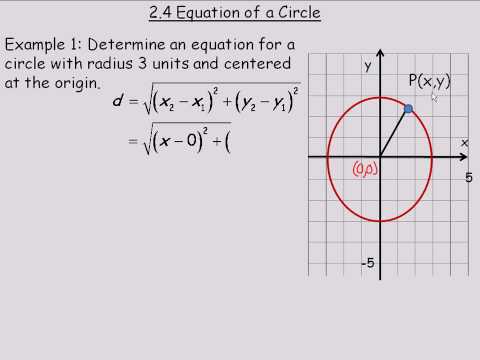
General view of the quadratic equation and standard formulas for its solution. The quadratic equation is a large and important class of equations that can be solved using both formulas and elementary functions. Solve quadratic equations using the formula x 1.2 \u003d. Solution of quadratic equations by the formula. To reduce the quadratic equation to the standard form, it is necessary to transfer all terms in one direction, for example, to the left and bring similar ones.


No comments:
Post a Comment
Note: Only a member of this blog may post a comment.